
The Blind Spot Between the Dock Door and the Road
Transport and yard operations sit at the boundary between controlled warehouse environments and the unpredictable outside world. This boundary is where the most expensive failures happen: trucks waiting hours for dock assignments, carriers consistently missing windows, demurrage charges accumulating unnoticed, and weather events triggering cascading delays that nobody saw coming.
Most organizations treat these as operational noise. They shouldn't. The data to predict, prevent, and optimize every one of these failures already exists. It's just scattered across TMS, YMS, WMS, carrier portals, and weather APIs, with no unified layer connecting them.
Here are ten use cases where blueclip transforms fragmented transport and yard data into operational intelligence.
1. Freight Cost Variance Detection
Every shipment has an expected cost and an actual cost. The gap between the two is where margin disappears. blueclip continuously compares contracted rates against invoiced amounts across every lane, carrier, and accessorial charge, flagging variances the moment they appear rather than weeks later during invoice reconciliation.
The platform surfaces patterns that manual audits miss: carriers consistently adding fuel surcharges above index, detention charges that spike on specific days, or accessorial fees that appear on routes where they shouldn't. Over a quarter, these small variances compound into six- and seven-figure overcharges.
2. Carrier Reliability Scoring
Not all carriers are equal, but most organizations treat them as interchangeable once they've passed procurement. blueclip builds dynamic reliability profiles for every carrier based on on-time pickup, on-time delivery, damage rates, claims history, and communication responsiveness. These scores update continuously, not quarterly.
When a carrier's reliability begins to slide, the platform detects the trend before it becomes a service failure. Operations teams can proactively shift volume to higher-performing carriers on critical lanes while engaging underperformers with data-backed conversations rather than anecdotal complaints.
3. Detention and Demurrage Tracking
Detention and demurrage charges are the silent tax on logistics operations. Trucks sit at docks waiting to load or unload. Containers sit at ports waiting to be picked up. Every hour costs money, and most organizations don't have a clear picture of the total impact until the quarterly finance review.
blueclip tracks dwell times across every facility, dock, and carrier in real time. It identifies which facilities consistently cause detention, which carriers arrive outside their windows, and which internal processes (slow receiving, paperwork delays, dock congestion) are the root causes. The result is a clear, actionable map of where dwell time is costing you money and why.
You can't negotiate detention charges down if you can't prove where the delays start.
4. Weather Disruption Routing
Weather events don't just cause delays. They cascade. A snowstorm in the Midwest doesn't just slow trucks on I-80. It backs up docks in Chicago, delays inbound freight to distribution centers across the region, disrupts outbound waves, and ultimately impacts customer delivery promises three states away.
blueclip integrates real-time weather data with shipment routes, carrier schedules, and facility capacity to model disruption impact before it arrives. When a severe weather event is forecast, the platform projects which shipments will be affected, estimates delay duration, and recommends rerouting or rescheduling options while alternatives still exist.
5. Dock Scheduling Optimization
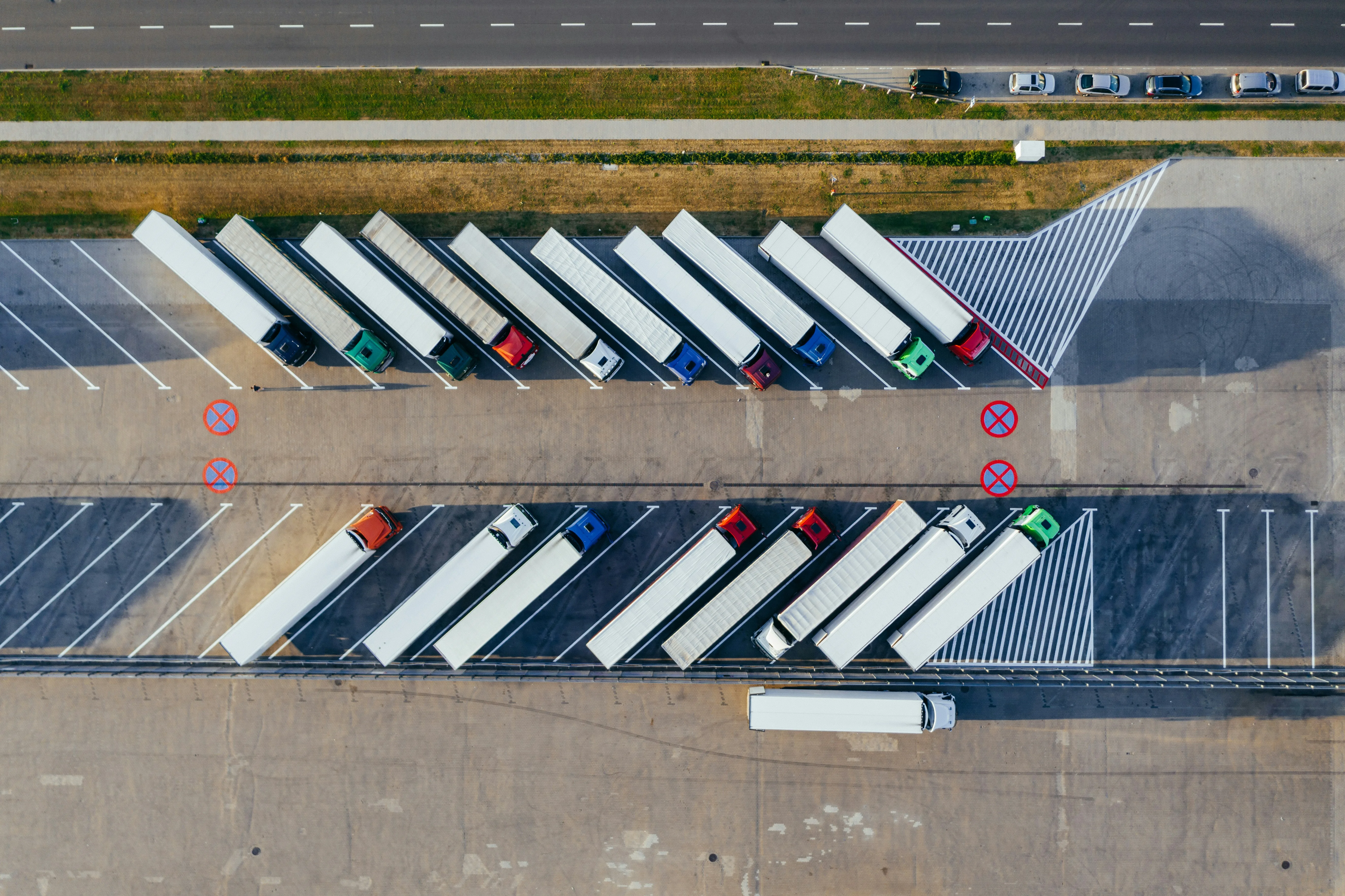
Dock doors are among the most constrained resources in any distribution center, yet most facilities manage them with static schedules and manual adjustments. The result is predictable: some doors sit idle while others have trucks queued three deep, and the receiving team alternates between having nothing to do and being completely overwhelmed.
blueclip analyzes historical arrival patterns, carrier reliability data, and inbound volume forecasts to build dynamic dock schedules that maximize throughput while minimizing wait times. When a carrier is running late, the platform automatically reallocates the dock slot and notifies affected teams, turning reactive scrambling into proactive flow management.
6. Yard Visibility and Trailer Tracking
Ask most warehouse managers where every trailer in their yard is right now, and you'll get a best guess. Yard management systems exist, but they're often outdated, poorly maintained, or simply not used because the overhead of manual check-ins exceeds the perceived benefit. The result is "lost" trailers sitting in yards for days, live loads waiting because nobody knows which dock to pull them to, and yard jockeys burning fuel driving around looking for specific trailers.
blueclip aggregates data from gate check-ins, YMS records, GPS pings, and dock activity to maintain a real-time yard map. It knows which trailers are loaded, which are empty, which have been sitting for too long, and which need to move next. Yard jockeys get prioritized task lists instead of radio calls.
7. Trailer Utilization Analysis
Empty miles and underutilized trailers are two of the largest controllable costs in transportation. Most organizations track these metrics at a high level but lack the granularity to identify specific improvement opportunities. blueclip analyzes trailer utilization across every lane, calculating cube utilization, weight utilization, and empty-mile ratios at the shipment level.
The platform identifies lanes where consolidation opportunities exist, routes where backhaul programs could reduce empty miles, and loading patterns where cube utilization consistently falls below target. Each finding comes with a quantified savings estimate and a recommended action.
8. Cross-Dock Flow Optimization
Cross-docking demands precision timing. Inbound freight must be matched to outbound loads with minimal dwell time, and any disruption to inbound timing ripples through the entire outbound schedule. Most cross-dock operations manage this coordination through experience and communication rather than data.
blueclip models cross-dock flow as a continuous optimization problem, matching inbound arrivals to outbound departures based on real-time ETA updates, load compatibility, and outbound delivery windows. When inbound delays occur, the platform recalculates the optimal sort plan and alerts teams to downstream impacts before they cascade.
9. Lane Performance Benchmarking
Every lane in your network has a performance profile: average transit time, variability, cost per unit, damage rate, and carrier mix. Most organizations review lane performance quarterly at best, and only for their highest-volume lanes. blueclip benchmarks every lane continuously, detecting performance degradation the week it starts rather than the quarter it shows up in a report.
When a lane's on-time performance drops from 94% to 87% over three weeks, the platform flags the trend, identifies whether the cause is carrier-specific or systemic, and recommends corrective action. This early detection prevents the gradual erosion of service levels that compounds into customer dissatisfaction.
10. Appointment Compliance Analytics
Carrier appointment compliance is the foundation of dock efficiency, but measuring it accurately requires reconciling data from scheduling systems, gate check-ins, and dock activity logs. blueclip automates this reconciliation, producing a clear compliance picture that accounts for early arrivals, late arrivals, no-shows, and the actual impact of each on dock operations.
The platform distinguishes between carriers who arrive 15 minutes late with minimal impact and those who arrive 15 minutes late during peak dock utilization, causing 90 minutes of cascading delays. This nuanced scoring gives procurement and operations teams the data they need to have meaningful performance conversations with carrier partners.
The yard is the last mile of inbound and the first mile of outbound. Losing visibility there means losing control of both.
These ten use cases represent the transport, dock, and yard intelligence that most operations teams know they need but can't build from fragmented systems. blueclip connects the data that already exists and turns it into decisions that move faster than the trucks.