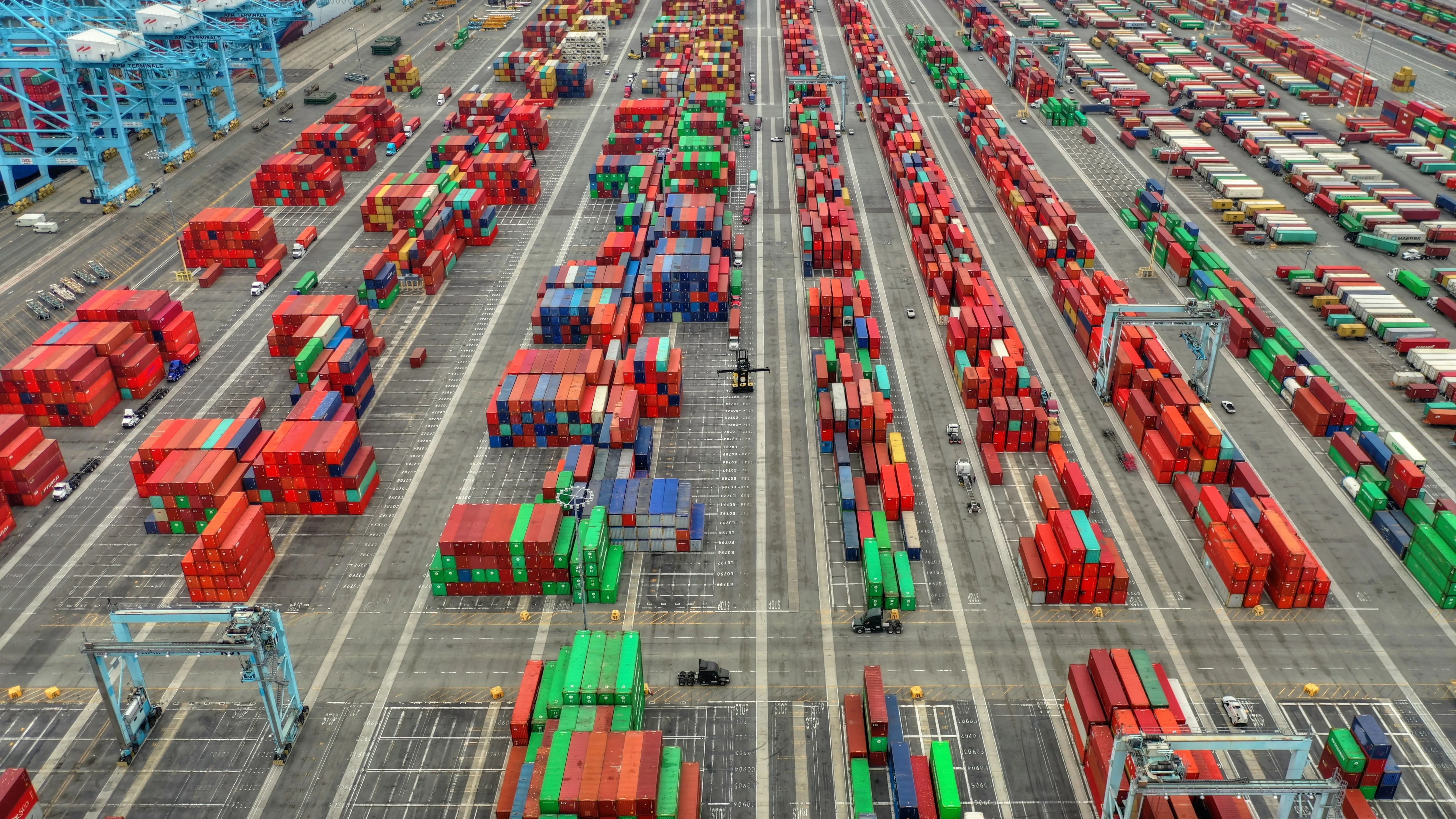
Aerial view of massive container terminal with thousands of containers and gantry cranes
Multi-Modal Transport & Freight

Four Modes. One
Intelligence Layer.

Ocean, air, rail, road. Each has its own systems, its own data, and its own blind spots. blueclip connects them into a single operational picture so you see disruptions forming, not just arriving.

5-12%
Freight Cost Reduction
8-15%
Empty Miles Eliminated
15-25%
Less Detention & Demurrage
2-4 wk
Time to Live
Transport Modes
Every Mode Connected.
Every Handoff Visible.
Multi-modal freight is managed in silos. Ocean freight lives in one system, road in another, rail in a third. blueclip unifies them so you see the entire shipment lifecycle, not fragments.
Ocean
Port congestion, vessel delays, container dwell time, demurrage exposure. blueclip monitors your ocean lanes and flags risk before containers miss their connection.
Air
Capacity crunches, rate volatility, customs clearance delays. blueclip tracks air freight performance and cost variance by lane and forwarder.
Rail
Intermodal transfers, rail yard dwell, equipment availability. blueclip connects rail data to your upstream and downstream flows for end-to-end visibility.
Road
Carrier reliability, load consolidation, last-mile performance, detention charges. blueclip scores carriers and optimizes load factors across your road network.
Container port operations at night with illuminated cranes
Freight Cost Intelligence

Your Contracted Rate
Is Not What You Pay.

The gap between contracted and actual freight cost averages 15-20%. Accessorials, fuel surcharges, detention, mode shifts, and spot rate leakage add up. blueclip decomposes variance at the lane and carrier level so you know exactly where the money goes.

Explore Operate →
Semi-truck speeding on highway with motion blur at golden hour
Load Optimization

Every Half-Empty Truck
Is Profit Left on the Road.

Two trucks at 55% capacity going to the same region could be one at 95%. blueclip identifies consolidation opportunities across clients, waves, and dispatch windows that your TMS misses because it only looks within a single scope.

Explore Improve →
Multi-Factor Risk

Single Disruptions Are Manageable.
Cascades Cost Millions.

A weather event plus a carrier with poor adverse-condition performance plus a dock at 95% capacity plus a volume spike. Each factor alone is manageable. Together they cascade into a $95K service failure. blueclip models compound risk across all factors and flags convergence 24-48 hours before it materializes.

Weather Modeling Carrier Stress Scoring Dock Capacity Risk Lane-Level Risk Score Volume Spike Detection
Shipping containers stacked against dramatic sunset sky
Dock & Yard Intelligence

Your Dock Is a Scheduling Problem
Disguised as a Capacity Problem.

All 24 doors occupied at 7am, 14 empty by 1pm. Drivers on detention clocks. Receiving overwhelmed, then idle. The pattern repeats daily. blueclip analyzes utilization, scores carrier punctuality, and recommends scheduling changes that smooth the flow.

See AI Agents →
Freight train crossing bridge over turquoise river through forest
Carrier Intelligence

Rate Gets You the Contract.
Reliability Keeps the Customer.

Carrier selection based on rate alone ignores the operational cost of unreliability: dock congestion, SLA breaches, damaged goods, and downstream delays. blueclip scores every carrier on punctuality, damage rates, compliance, and stress-condition performance.

See Integrations →
End-to-End Flow
Intelligence at Every
Handoff Point.
Multi-modal freight fails at handoffs. The container that sailed on time but sat at port for 9 days. The intermodal transfer that missed its rail slot. blueclip monitors every transition.
01
Origin
Supplier readiness, booking confirmation, documentation compliance
02
First Mile
Pickup performance, load verification, carrier departure tracking
03
Transit
Mode-specific tracking, disruption modeling, ETA recalculation
04
Transfer
Port dwell, intermodal handoff, customs clearance, container release
05
Last Mile
Dock scheduling, delivery promise accuracy, detention prevention
The Real Cost of Fragmented Freight
Six Problems blueclip
Solves Across Every Mode.
Each one is accepted as "normal" by most operations. blueclip quantifies the cost and eliminates the root cause.
15-20%
Freight Cost Drift
Actual freight spend exceeds contracted rates by 15-20%. Accessorials, detention, and spot rates are invisible until the quarterly P&L.
$1.8M
Unconsolidated Loads
Two half-trucks to the same region, same carrier, same day. The consolidation opportunity exists in the data. Nobody assembles it.
$4,200/wk
Dock Detention
Morning pile-ups drive detention fees, idle labor, and missed departures. Afternoon docks sit empty. The pattern repeats daily.
5-10x
Cascade Cost
Multi-factor disruptions cost 5-10x more than single-cause incidents. Nobody models the convergence until it arrives.
20-30%
Emissions Guesswork
Transport emissions estimated from industry averages are wrong by 20-30%. Without lane-level data, sustainability targets stay aspirational.
80%
Blind Carrier Selection
Carrier selection based on rate alone. Ongoing punctuality, damage, and compliance are rarely scored. Underperformers persist because there is no evidence to manage them out.
AI Agents for Transport
Agents That Monitor
Every Lane, Every Mode.
blueclip deploys purpose-built agents that monitor your freight operation 24/7. They detect risk, quantify cost, and recommend action before disruptions cascade.
Disruption Prediction Agent
Combines weather data, carrier stress scores, volume patterns, and dock capacity into a compound risk model. Flags cascade potential 24-48 hours before it materializes.
Freight Cost Variance Agent
Monitors every shipment against contracted rates. Decomposes variance by category: fuel, accessorials, detention, spot, mode shifts. Flags anomalous charges for audit.
Consolidation Agent
Scans orders across clients, waves, and dispatch windows to find consolidation matches. Calculates the cost of every partial load and recommends optimal clustering.
Carrier Performance Agent
Scores carriers on punctuality, damage, compliance, and stress-condition reliability. Provides evidence-based scorecards for procurement and renewal conversations.
Explore All Agents → Platform Architecture →
Sustainability
Estimated Emissions
Enable Reporting. Operational
Emissions Enable Improvement.
blueclip calculates transport emissions from actual operational data, by lane, carrier, and load factor, not from industry averages. The result: audit-ready reporting and actionable reduction targets.
Lane-Level Emissions
CO2 calculated per lane using actual distance, load weight, load factor, and carrier. Reveals where the highest emissions concentrations are.
Mode Shift Impact
Quantifies the emissions benefit of shifting from road to rail, LTL to FTL, or air to ocean. Makes the business case with both cost and carbon numbers.
Audit-Ready Reporting
GLEC, GHG Protocol, Science Based Targets. Emissions derived from operational reality, not estimated from averages. Higher confidence for external reporting.
Signals
Hormuz Blocked. Your Rotterdam
Cargo Just Got Rerouted via Cape.
blueclip monitors port congestion, carrier capacity, fuel surcharges, and geopolitical events across every mode. Every signal mapped to your specific lanes, handoffs, and transit windows in dollars and days.
72hrearly warning
1,000+sources
See Signals →
Aerial view of container ship cutting through turquoise ocean
Signals for Freight
See Disruption Before
It Reaches Your Dock.
blueclip monitors external signals that impact freight operations and maps them to your specific exposure in dollars, not headlines.
Port Congestion
Terminal delays, vessel bunching, and berth availability tracked across your key ports. Dwell time risk flagged before containers incur demurrage.
Weather & Disruption
Storms, floods, and extreme weather mapped to your lanes, carriers, and delivery windows. Cross-referenced with carrier stress-condition history.
Rate & Capacity Shifts
Spot rate spikes, capacity crunches, and carrier allocation changes detected before they impact your freight budget.
See All Signals →
Typical Transport Results
5-12%
Freight Cost Reduction
15-25%
Detention Reduction
10-20%
Weather Delay Reduction
10-15%
Carrier On-Time Improvement
Ready to See Every Mode,
Every Lane, Every Dollar?
Deploy in 2-4 weeks. Connects to your TMS, ERP, and carrier systems. No rip-and-replace.
Book a Demo →